AI backend builder for prototype to production
Describe your backend requirements in natural language through AutoBE’s chat interface.
AutoBE will analyze your requirements and build the backend application for you. The generated backend application is designed to be 100% buildable by AI-friendly compilers and ensures stability through powerful e2e test functions.
With such AutoBE, build your first backend application quickly, then maintain and extend it with AI code assistants like Claude Code for enhanced productivity and stability.
AutoBE will generate complete specifications, detailed database and API documentation, comprehensive test coverage for stability, and clean implementation logic that serves as a learning foundation for juniors while significantly improving senior developer productivity.
Check out these complete backend application examples generated by AutoBE:
- To Do List:
todo - Discussion Board:
bbs - Reddit Community: `reddit
- E-Commerce:
shopping- Requirements Analysis: Report
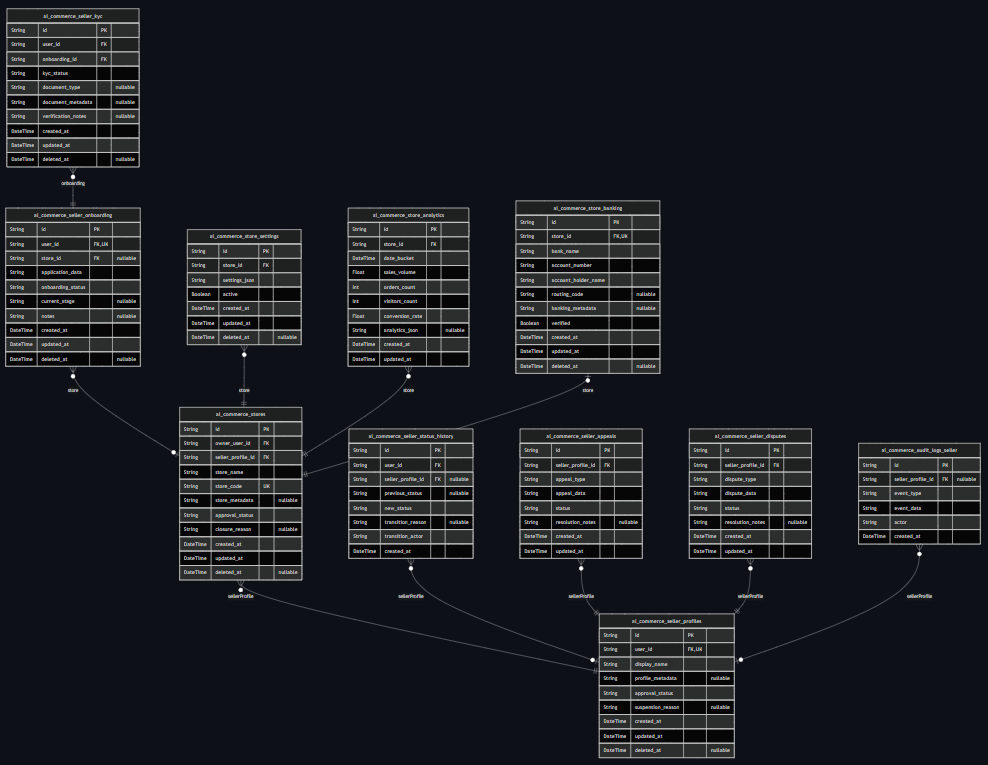
- Database Design: Entity Relationship Diagram / Prisma Schema
- API Design: API Controllers / DTO Structures
- E2E Test Functions:
test/features/api - API Implementations:
src/providers
Getting Started
git clone https://github.com/wrtnlabs/autobe --depth=1
cd autobe
pnpm install
pnpm run playground
To use AutoBE, clone the repository and run the playground application locally. This allows you to chat with AutoBE’s AI agents, manage multiple sessions, and use various LLM providers including local models like qwen3-80b-a3b.
After installation, the playground will be available at http://localhost:5713 . You can interact with AutoBE through a chat interface - simply describe what you want to build, and AutoBE will generate the backend application for you.
Here’s an example conversation script that guides AutoBE to create an “Economic/Political Discussion Board”:
- Requirements Analysis: “I want to create an economic/political discussion board. Since I’m not familiar with programming, please write a requirements analysis report as you see fit.”
- Database Design: “Design the database schema.”
- API Specification: “Create the API interface specification.”
- Testing: “Make the e2e test functions.”
- Implementation: “Implement API functions.”
Todo
| Analyze | actors: 2, documents: 6 | Analyze Phase Token Usage: 804.3K in: 635.7K / out: 168.6K Function Calls: 68 / 74 (91.9%) | |
| Database | namespaces: 2, models: 8 | Database Phase Token Usage: 713.0K in: 680.8K / out: 32.2K Function Calls: 22 / 22 (100.0%) | |
| Interface | operations: 22, schemas: 31 | Interface Phase Token Usage: 17.25M in: 16.78M / out: 476.1K Function Calls: 220 / 273 (80.6%) | |
| Test | functions: 66 | Test Phase Token Usage: 6.41M in: 6.16M / out: 244.8K Function Calls: 158 / 165 (95.8%) | |
| Realize | functions: 33 | Realize Phase Token Usage: 2.92M in: 2.78M / out: 138.4K Function Calls: 94 / 111 (84.7%) |
Bbs
| Analyze | actors: 3, documents: 6 | Analyze Phase Token Usage: 1.67M in: 1.33M / out: 340.5K Function Calls: 131 / 147 (89.1%) | |
| Database | namespaces: 6, models: 22 | Database Phase Token Usage: 2.85M in: 2.74M / out: 116.1K Function Calls: 68 / 71 (95.8%) | |
| Interface | operations: 72, schemas: 88 | Interface Phase Token Usage: 48.36M in: 47.31M / out: 1.05M Function Calls: 643 / 778 (82.6%) | |
| Test | functions: 204 | Test Phase Token Usage: 21.10M in: 20.27M / out: 827.6K Function Calls: 522 / 535 (97.6%) | |
| Realize | functions: 108 | Realize Phase Token Usage: 9.87M in: 9.05M / out: 815.0K Function Calls: 281 / 331 (84.9%) |
| Analyze | actors: 2, documents: 6 | Analyze Phase Token Usage: 1.33M in: 1.07M / out: 253.7K Function Calls: 99 / 105 (94.3%) | |
| Database | namespaces: 6, models: 21 | Database Phase Token Usage: 2.71M in: 2.53M / out: 171.5K Function Calls: 60 / 63 (95.2%) | |
| Interface | operations: 62, schemas: 80 | Interface Phase Token Usage: 67.76M in: 66.30M / out: 1.46M Function Calls: 628 / 898 (69.9%) | |
| Test | functions: 183 | Test Phase Token Usage: 25.28M in: 24.14M / out: 1.14M Function Calls: 608 / 624 (97.4%) | |
| Realize | functions: 98 | Realize Phase Token Usage: 11.70M in: 11.03M / out: 661.2K Function Calls: 286 / 320 (89.4%) |
Shopping
| Analyze | actors: 3, documents: 6 | Analyze Phase Token Usage: 3.83M in: 3.29M / out: 541.3K Function Calls: 170 / 197 (86.3%) | |
| Database | namespaces: 10, models: 30 | Database Phase Token Usage: 5.01M in: 4.87M / out: 148.1K Function Calls: 85 / 87 (97.7%) | |
| Interface | operations: 148, schemas: 155 | Interface Phase Token Usage: 160.24M in: 157.56M / out: 2.68M Function Calls: 1322 / 1764 (74.9%) | |
| Test | functions: 429 | Test Phase Token Usage: 84.24M in: 81.16M / out: 3.08M Function Calls: 1403 / 1445 (97.1%) | |
| Realize | functions: 207 | Realize Phase Token Usage: 32.63M in: 31.51M / out: 1.12M Function Calls: 599 / 665 (90.1%) |
The playground includes a replay feature at http://localhost:5713/replay/index.html where you can view chat sessions from the AutoBE development team’s testing and benchmarks.
How AutoBE Works
AutoBE follows a waterfall methodology to generate backend applications, with 40+ specialized agents handling each phase. The agents work in coordinated teams throughout the development process.
Each waterfall stage includes AI-friendly compilers that guarantee type safety of the generated code. Rather than generating code directly, AutoBE’s agents first construct language-neutral Abstract Syntax Trees using predefined schemas. Each AST node undergoes validation against type rules before any code generation occurs, catching structural errors at the conceptual level rather than during compilation.
This approach is designed to ensure that the final generated TypeScript and Prisma code is 100% buildable. Based on our testing with multiple example projects including e-commerce platforms, discussion boards, and task management systems, AutoBE maintains this compilation guarantee across diverse application types.
To illustrate this process, here are the phase outputs from our “Economic/Political Discussion Board” example:
- Requirements Analysis: Report
- Database Design: Entity Relationship Diagram / Prisma Schema
- API Specification: API Controllers / DTO Structures
- E2E Test Functions:
test/features/api - API Implementations:
src/providers
Also, you don’t need to use all phases - stop at any stage that fits your needs. Whether you want just requirements analysis, database design, API specification, or e2e testing, AutoBE adapts to your workflow.
Additionally, if you’re skipping the full pipeline because of language preference rather than workflow needs, this capability is in development - AutoBE’s language-neutral AST structure will soon support additional programming languages beyond TypeScript.
Type-Safe Client SDK
Every AutoBE-generated backend automatically includes a type-safe client SDK, making frontend integration seamless and error-free. This SDK provides:
- Zero Configuration: SDK is auto-generated alongside your backend - no manual setup required
- 100% Type Safety: Full TypeScript support with autocomplete and compile-time validation
- Framework Agnostic: Works with React, Vue, Angular, or any TypeScript/JavaScript project
- E2E Test Integration: Powers AI-generated test suites for comprehensive backend testing
import api, { IPost } from "autobe-generated-sdk";

// Type-safe API calls with full autocomplete
const connection: api.IConnection = {
  host: "http://localhost:1234",
};
await api.functional.users.login(connection, {
  body: {
    email: "user@example.com",
    password: "secure-password",
  },
});

// TypeScript catches errors at compile time
const post: IPost = await api.functional.posts.create(connection, {
  body: {
    title: "Hello World",
    content: "My first post",
    // authorId: "123" <- TypeScript error if this field is missing!
  },
});
This SDK eliminates the traditional pain points of API integration - no more manual type definitions, no more runtime surprises, and no more API documentation lookups. Your frontend developers can focus on building features, not wrestling with API contracts.
Beyond Frontend Integration: The SDK powers both frontend development and E2E test generation. AutoBE uses the same type-safe SDK internally to generate comprehensive test suites, ensuring every API endpoint is thoroughly tested. This creates a robust feedback loop that enhances backend stability - AI writes tests using the SDK, the SDK ensures type safety, and your backend becomes more reliable with every generated test.
Roadmap Schedule
AutoBE has successfully completed Alpha, Beta, and Gamma development phases, establishing a solid foundation with 100% compilation success rate. The current Delta Release focuses on transitioning from horizontal expansion to vertical deepening.
Strategic Shift: In Gamma, we rapidly implemented features like RAG, Modularization, and Complementation under a “just ship it” philosophy. Delta fills the stability gaps that remained by systematically discovering and fixing hidden defects through Local LLM benchmarks.
Key Focus Areas:
- Local LLM Benchmark: Using open-source models like Qwen3 as a touchstone to discover hidden defects that commercial models mask, ensuring more robust operation across all model types
- Validation Logic Enhancement: Strengthening schemas and validation logic through dynamic function calling schemas, JSON Schema validators, and progressive validation pipelines
- RAG Optimization: Completing the Hybrid Search system (Vector + BM25) with dynamic K retrieval and comprehensive benchmark tuning
- Design Integrity: Building mechanisms to verify and ensure design consistency between Database and Interface phases through coverage and schema review agents
- Multi-lingual Support: Launching Java/Spring code generation alongside TypeScript/NestJS, with language-neutral AST structures enabling future language additions
- Human Modification Support: Enabling maintenance continuity by parsing user-modified code back into AutoBE’s internal AST representation, ensuring AutoBE remains useful beyond initial generation
This roadmap prioritizes stability and depth over feature breadth, informed by real-world production experience from Gamma.
Current Limitations
While AutoBE achieves 100% compilation success, please note these current limitations:
Runtime Behavior: Generated applications compile successfully, but runtime behavior may require testing and refinement. Unexpected runtime errors can occur during server execution, such as database connection issues, API endpoint failures, or business logic exceptions that weren’t caught during compilation. We strongly recommend thorough testing in development environments before deploying to production. Our v1.0 release targets 100% runtime success to address these issues.
Design Interpretation: AutoBE’s database and API designs may differ from your expectations. We recommend thoroughly reviewing generated specifications before proceeding with implementation, especially before production deployment.
Token Consumption: AutoBE requires significant AI token usage for complex projects. Based on our testing, projects typically consume 30M-250M+ tokens depending on complexity (simple todo apps use ~4M tokens, while complex e-commerce platforms may require 250M+ tokens). We are working on RAG optimization to reduce this overhead in future releases.
Maintenance: AutoBE focuses on initial generation and does not provide ongoing maintenance capabilities. Once your backend is generated, you’ll need to handle bug fixes, feature additions, performance optimizations, and security updates manually. We recommend establishing a development workflow that combines the generated codebase with AI coding assistants like Claude Code for efficient ongoing development and maintenance tasks.
License
AutoBE is licensed under the GNU Affero General Public License v3.0 (AGPL-3.0) . If you modify AutoBE itself or offer it as a network service, you must make your source code available under the same license.
However, backend applications generated by AutoBE can be relicensed under any license you choose, such as MIT. This means you can freely use AutoBE-generated code in commercial projects without open source obligations, similar to how other code generation tools work.